THE PROCESS
Ancient Techniques Meet Contemporary Vision
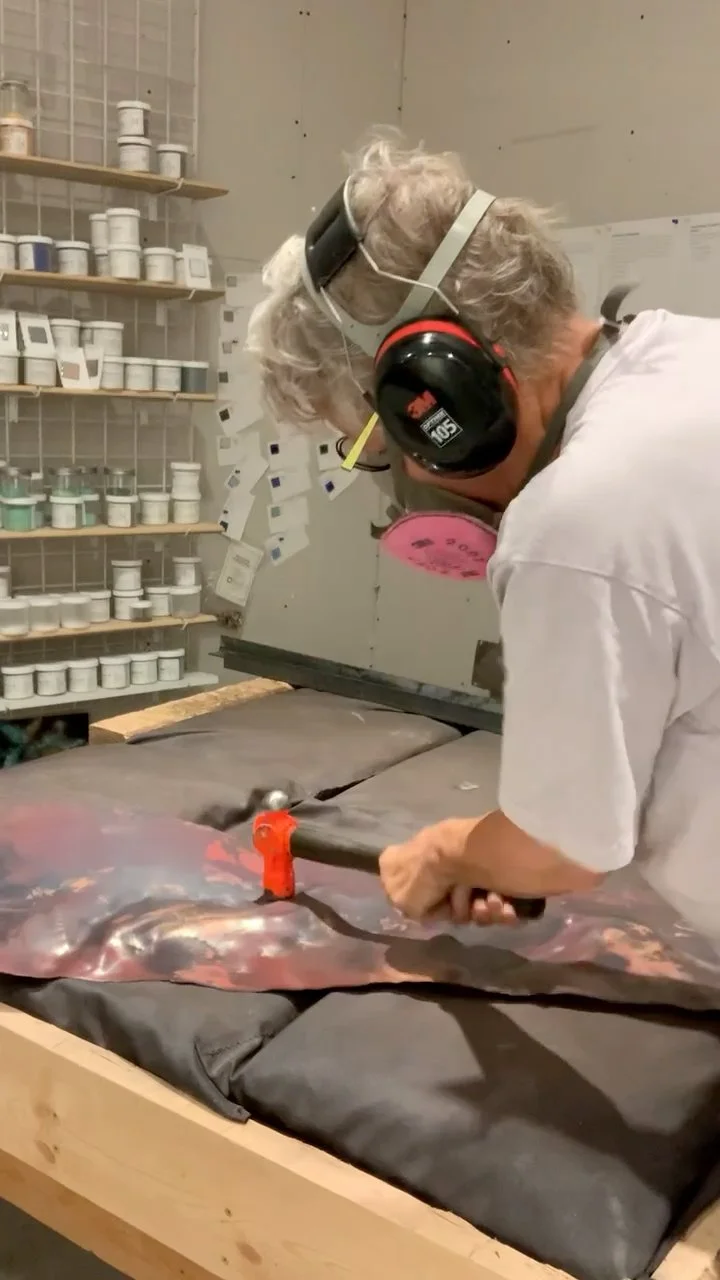
Hand-Hammering the Copper: Repoussé and Chasing
Each sculpture begins with 99.9% pure copper, cut with precision using a plasma cutter. It is then TIG welded to stainless steel firing supports that will later serve as the mounting system.
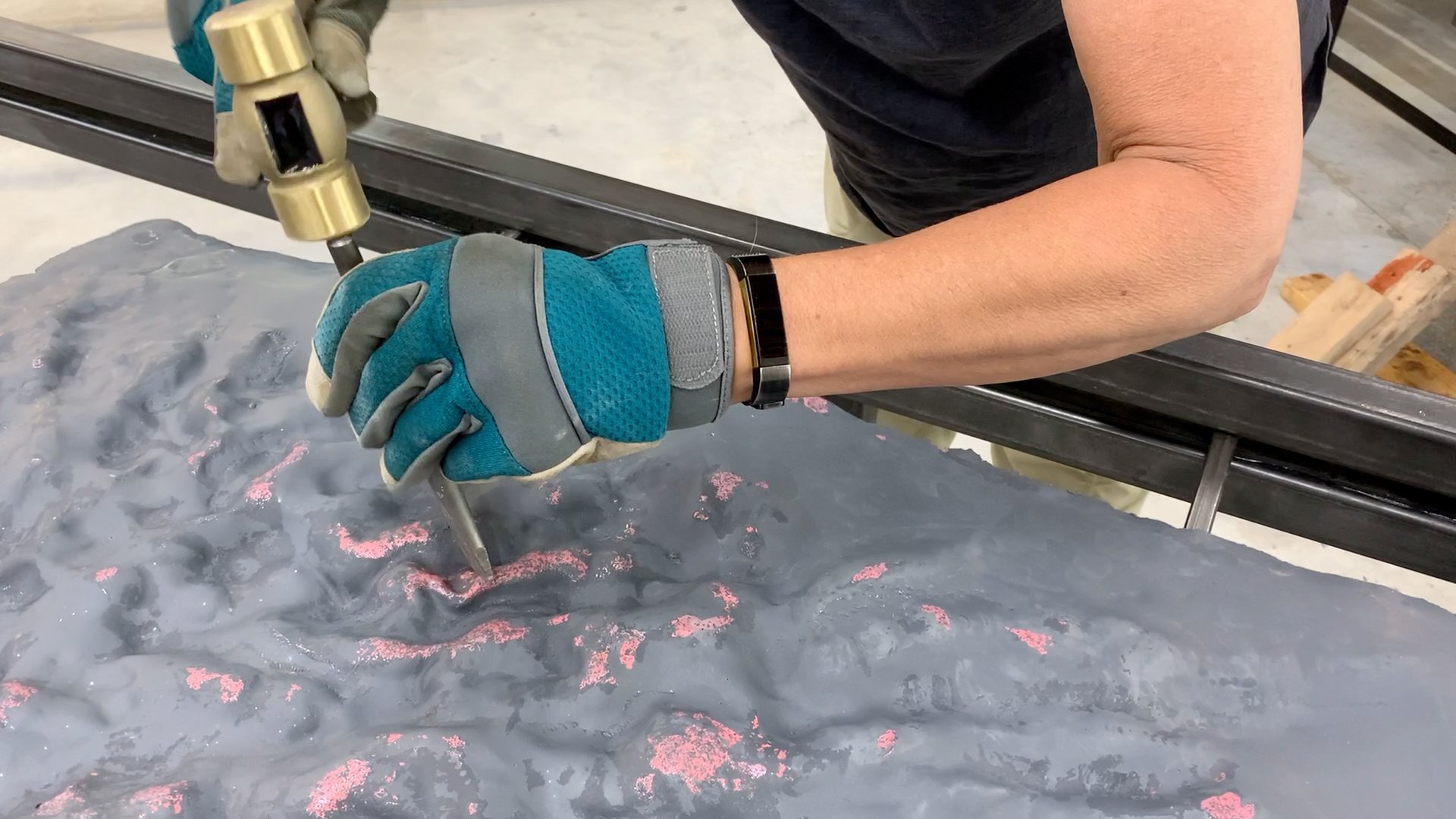
Two ancient metalworking techniques are employed: Repoussé and Chasing. These create the dimensional relief that forms the foundation of each piece. In repoussé, the copper is hammered from the reverse side, raising the design on the front surface. In chasing, the design is refined and detailed from the front, adding texture and definition.
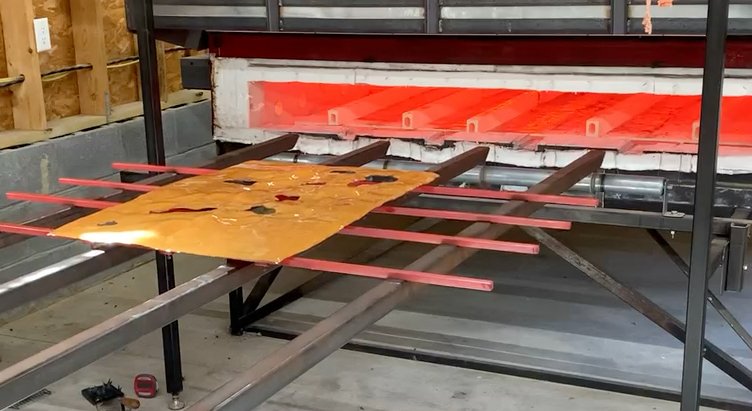
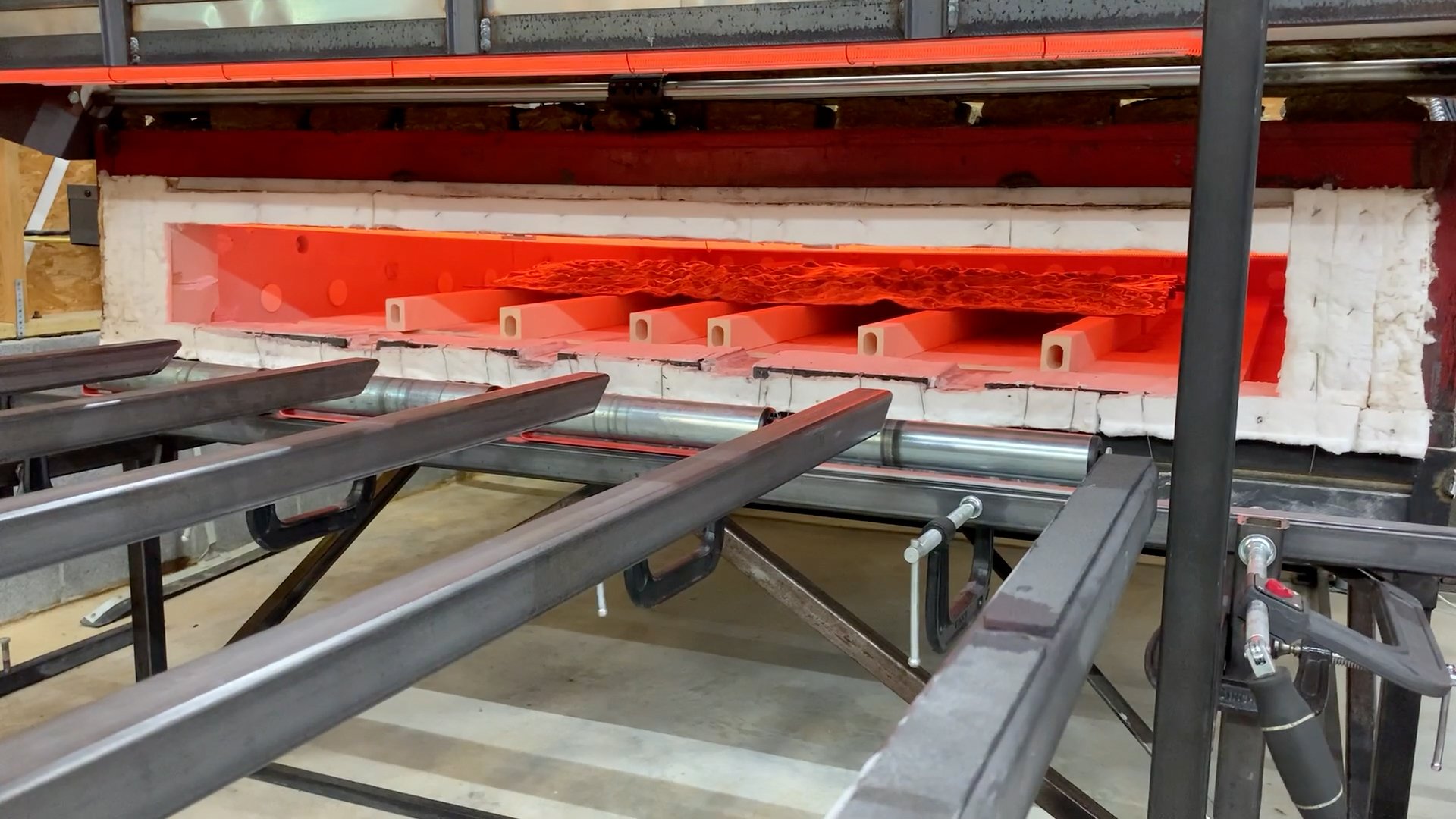
The copper must be repeatedly annealed during this hand-hammering process. The metal is inserted into the furnace to restore malleability. As the metal is worked, it becomes "work-hardened," making it increasingly difficult to sculpt. Frequent annealing is required to continue shaping the copper into its final three-dimensional form.
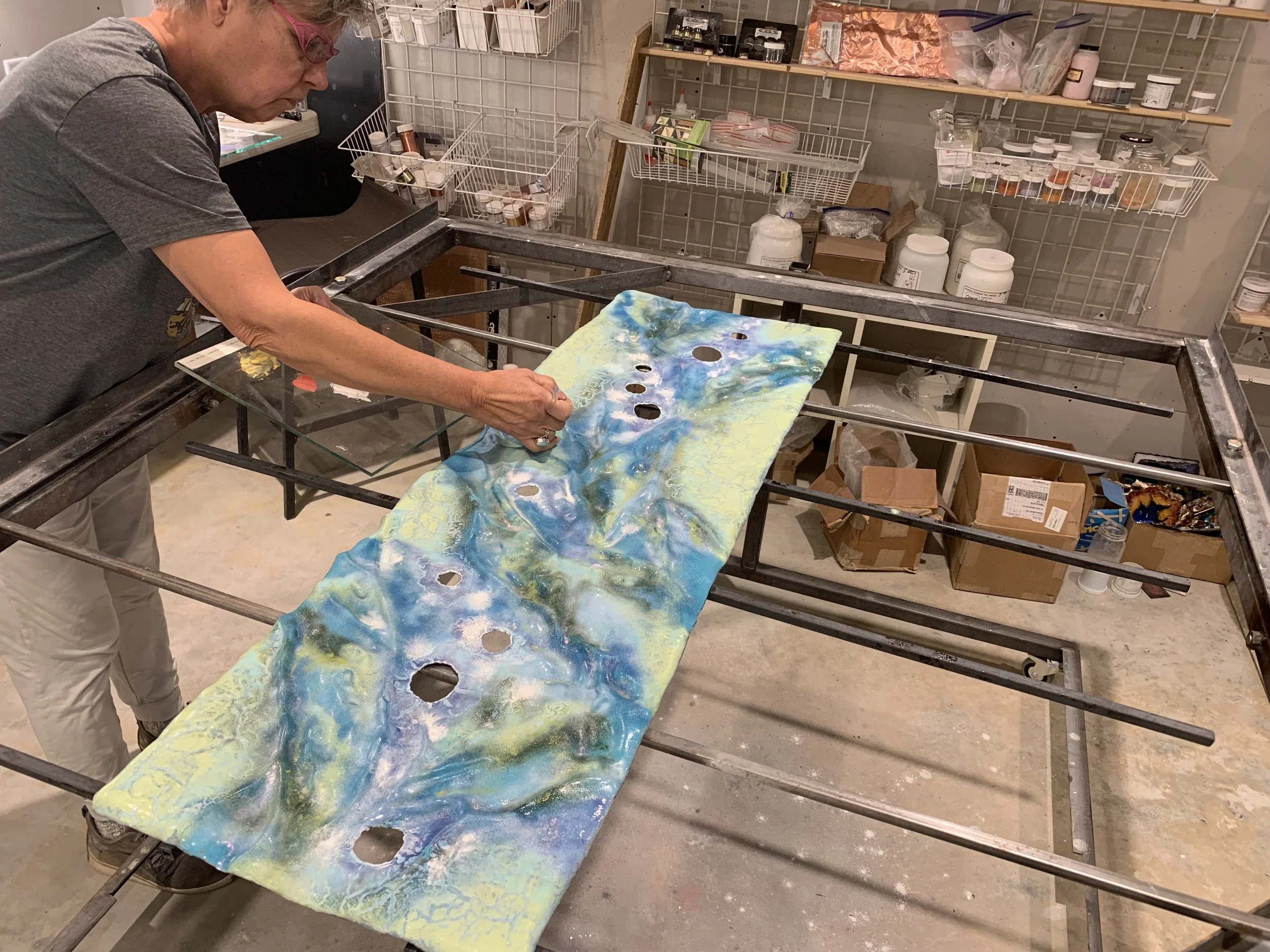
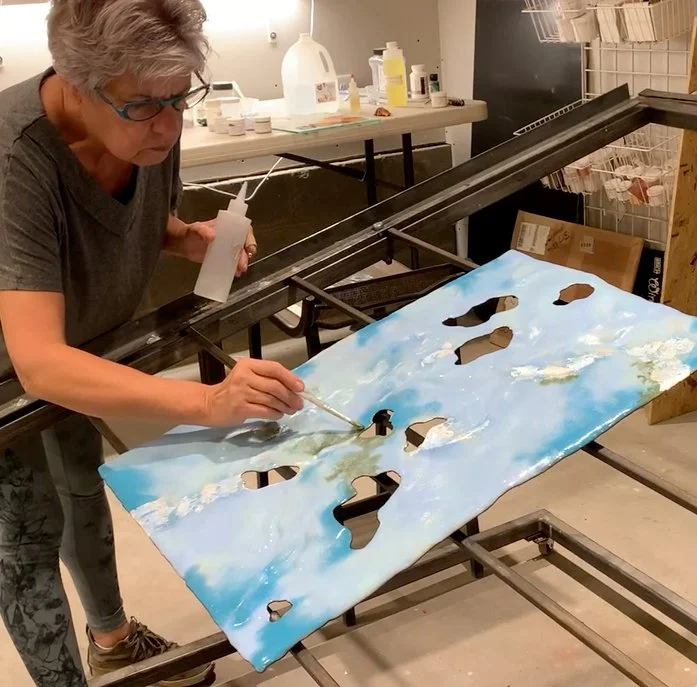
Applying the Glass: Vitreous Enamel
Once the copper bas-relief has been completed, the meticulous process of applying vitreous enamel begins. Finely ground jewelry glass is fused to the metal surface through high-temperature firing.
This centuries-old technique dates back to ancient Egypt and has been used to adorn jewelry, religious artifacts, and decorative objects throughout history. This traditional craft has been refined and expanded to create these large-scale contemporary sculptures.
The glass is applied in both dry and wet forms, using various painting and layering techniques. Each layer may be transparent, translucent, or opaque. Most pieces combine all three in complex, multi-layered compositions.
Firing: The Transformation
Each layer of glass is fired at approximately 1500°F in the kiln. Exact furnace temperatures, firing times, and volumes of glass are critical to achieving stable, luminous glass layers on the copper.
After firing, the piece is removed from the furnace and allowed to cool. The next layer is then applied, and the process is repeated. Depending on the desired depth, color saturation, and visual effect, a single sculpture may be fired up to 20 times.
This is where the art truly comes alive. Each firing transforms glass into brilliant, permanent color, building dimension and luminosity layer by layer.
The result: A one-of-a-kind sculpture with vivid color, tactile dimension, and museum-quality permanence. These works are suitable for display indoors or outdoors and are impossible to replicate.